How did you get started? You, a suburban housewife with two children? You just jumped into international travel journalism? people asked.
I told them that my mom’s death gave me a small inheritance. I asked my husband to travel, and he advised me to go alone. The kids were away in college.
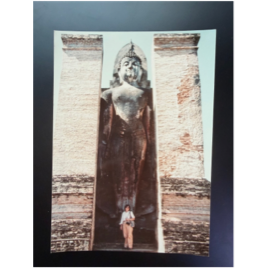
Where should I go? On the world’s map, China had Burma tucked into its side, and Thailand was nearby. I was totally clueless about distances. Luckily, I joined a group to China’s Silk Road (China had just opened to tourism) then another group to Burma, and a month alone, zigzagging south through Thailand. All wonderful and detailed in my book to be released by John Koehler Books on 9/9/2026. Patriciawoeber.com The photo: I stand with the tallest Buddha in Sukhothai, Thailand.
The question of safety while traveling alone has led people to tell me they could never travel alone, and they asked for one or two of my adventures. I tell of the tranquil perfection of Phi Phi Island, Thailand, which hid unforeseen threats: while swimming alone in the Andaman Sea, I got dragged out by a current into the South China Sea; during a pirate raid I hid all night by myself, and later a stalker forced me to leave the island. Only the helpfulness of strangers helped me escape. I’ve described the details in my book Getting the Story (to be published by John Koehler Books in September this year.)
The Phi Phi story, and others touch on the concerns of a changing world: the most isolated places lose their innate purity as they become over-developed by tourism’s glitz. I witnessed this in Phi Phi and other islands in the Gulf of Thailand.
You know the old cliché of every cloud has a silver lining? My cliché began in the Grand Palace in Bangkok, Thailand’s greatest and most sacred religious temple complex, when the police accosted me. They mistakenly thought I was photographing the monks in this most holy place, which is forbidden. I fled and reached the main road. A monk had witnessed the incident and had followed. He called to me and sympathetically suggested we could chat when others were not near us and he invited me to visit his temple. I worried about my safety as we travelled on river boats. This meeting resulted in four days of the monk’s companionship, as he bestowed a rare glimpse into the Buddhist way of life. He thrilled to practice his english. We visited glorious temples and Thailand’s ancient city of Ayutthaya dating from 1350. We never touched as the monk could loose his reincarnation by contact with a female. Our platonic friendship, a man in his 20s and a woman over 40, began because of a difficult situation and resulted in a beneficial outcome. More details are included in a chapter of my book, Getting the Story, that will be released by John Koehler Books in September this year.
My first impression of the grouchy elderly guide was that I didn’t want to
spend a minute with him, let alone put my life in his hands.
Skiing Chamonix’s “iconic” terrain of challenging slopes and glaciers
required a guide. I’d joined an American ski tour and during the week
heard the other skiers’ breathless account’s of the Vallee Blanche,
a 12 mile, off-piste glacier run. Steep, vast, and a guide was essential.
It sounded too extreme for me, an intermediate, so it took days to decide
to brave it. The hotel reception arranged a guide for the next day.
After breakfast this grouchy, elderly, over-tanned and highly wrinkled
ski instructor arrived. Introduced as Monsieur Bozo, he glared at me
and heatedly argued with the hotel staff. I didn’t understand a word
and assumed he’d refused to guide me, as he turned away and hurriedly left.
“Go! Go!” the hotel receptionist said. “Follow him.” I silently
followed him to the tram building. The tram rose above mind-blowing
views. At the top, we silently sidestepped a terrifying snow ridge with
sheer drops in front and behind. Reaching the base, he signaled to me to stay in
his tracks, then led. We crossed miles of snow, places with hidden
crevasses on the immense Vallee Blanche. Silently we reached the other side.
I was ecstatic that I’d done it. He headed for a rock and gestured for me to sit.
He pulled an orange out of somewhere, peeled it and silently handed me half.
“Merci Bozo,” I said. In slow French, he told me about his daughter. I may
have understood half. In my terrible French I told him about my sons.
He may have understood half. We smiled at each other. “Merci Bozo.”
After more skiing we eventually reached the village. Silently, he headed for a sidewalk
cafe-bar. He ordered something. The waitress brought two huge beers.
Silently he pushed one in front of me. Some locals joined us and chatted with him.
Several came by to shake his hand. I put my arm around his shoulders and kissed
his cheek. I whispered, “I love you, Monsieur Bozo,” He’d brought me down safely
and I’d experienced an amazing day. Back at hotel the manager told me his name
was Monsieur Bozon, he was the most famous skier in the French Alps. His ski
champion son had been killed skiing and the monument on the peak of Le Brevent was
a memorial to him. First impressions can be wrong. Maybe it’s best to hold off
making judgements until you know more.
“Reading makes immigrants of us all. It takes us away from home, but more important, it finds homes for us everywhere.”
Written by author Jean Rhys
I like that “it finds homes for us everywhere,” because everyone deserves a roof over their head.
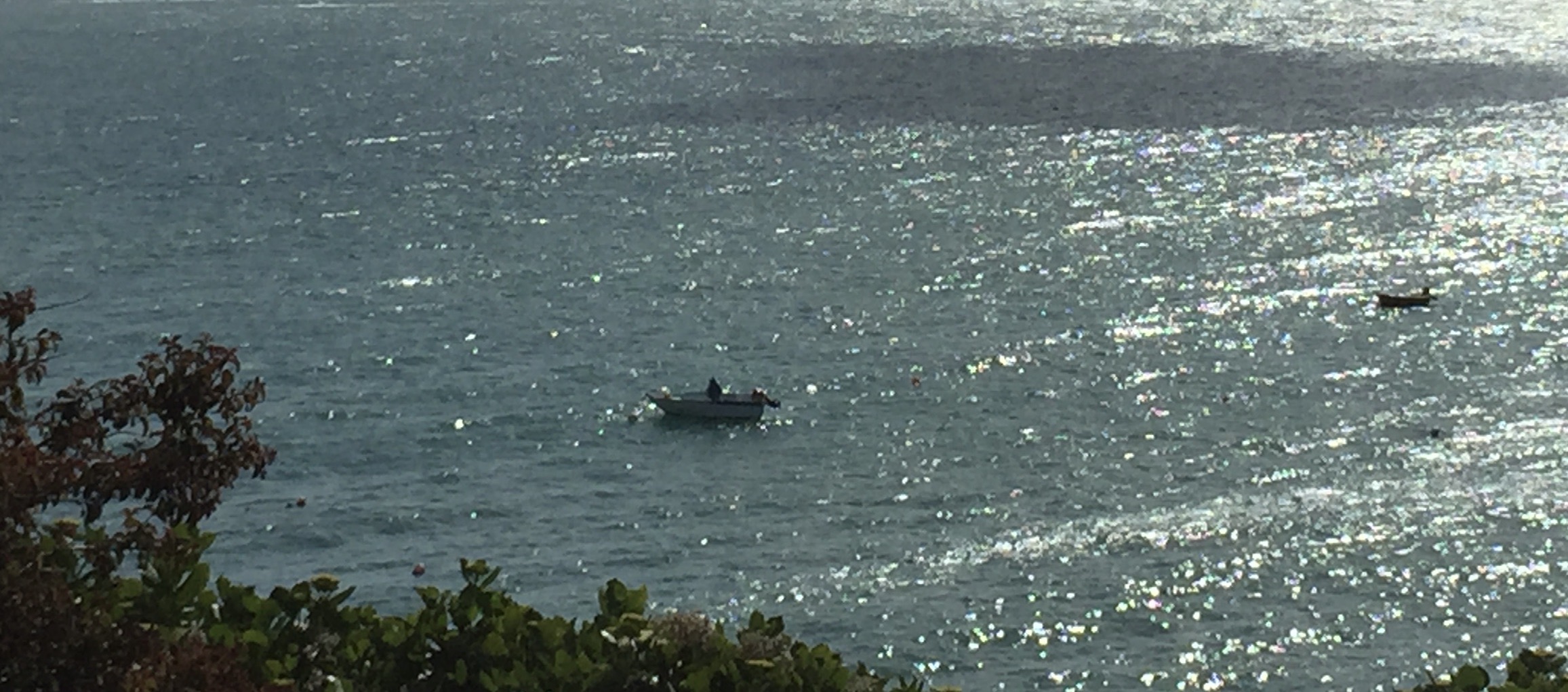
My teenage son asked to come along when he heard that I planned to stay in the Grand-Hotel du Cap-Ferrat in Saint-Jean-Cap-Ferrat on the Cote d’Azur, the Riviera of France’s Mediterranean coast. We had recently seen the hilarious movie “Dirty Rotten Scoundrels,” a comedy with actors Michael Caine and Steve Martin. Most of the scenes were filmed in and around this luxury hotel. My son came along, and we drove my planned itinerary for a travel article that included a few famous resorts hotels, quaint harbors and pebble beaches located between St. Tropez and Monaco. The Cap-Ferrat hotel was everything we expected. Great food, friendly guests, and near enough for a trip to Monaco. Departing in the rented Renault Clio, we stopped in Nice and walked the famous promenade overlooking the sea. Passing Le Negresco hotel, my son suggested going in for lemonade as we were thirsty. I told him I wanted to take a look at the lobby and a bedroom. This glitzy hotel’s glam clients were known for stiletto heels, bouffant hair and gold jewelry. We wore sneakers and blue jeans. We crossed the marble lobby and headed for the reception desk. Two burly men in uniforms, possibly porters or security, approached us. One stood on each side of me. “Madame please exit the hotel.” I could have handed out my business card and asked for the general manager. Instead I allowed them to hustle us. We were escorted out the grand entrance and down the stairs. On the promenade they told me not to return. I didn’t answer and I wasn’t upset. I didn’t care that I’d just been thrown out of a hotel. My son was staring at me. “I’m so sorry mom. One day I will buy this hotel for you.”
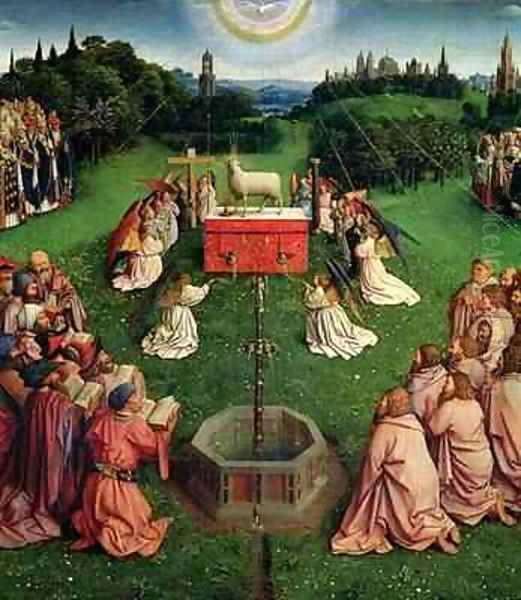
The Belgian guide told me we’re going to Max’s Café in Ghent to eat the best waffles in the country. They were delicious! Yes, I ate two. Afterwards, we left the café, and he silently led me to a nearby building. Inside, the painting of the Adoration of the Mystic Lamb, the most famous altarpiece in the world, stood covered by glass on a box. This oil painting was created in 1432 by the Van Eyck brothers. I was stunned by the beauty of the lamb, the amazing details and the strong feeling of spirituality. The painting was revered for its beauty, mysticism and symbolism.The mysticism emphasized inner spiritual intuition and profound insight. The detailed items, such as flowers, represented themes and meanings and they symbolized sacrifice, purity and innocence. Even colors have specific meanings. The painting was temporarily exhibited in the glass box while the cathedral was being renovated. This masterpiece was missing the side panels, although the main panel stood intact. It had been stolen several times, and at the end of World War ll it was saved by the Monuments Men (see the movie) who had found it hidden is the Althusser salt mine with other great art stolen by the Nazis.
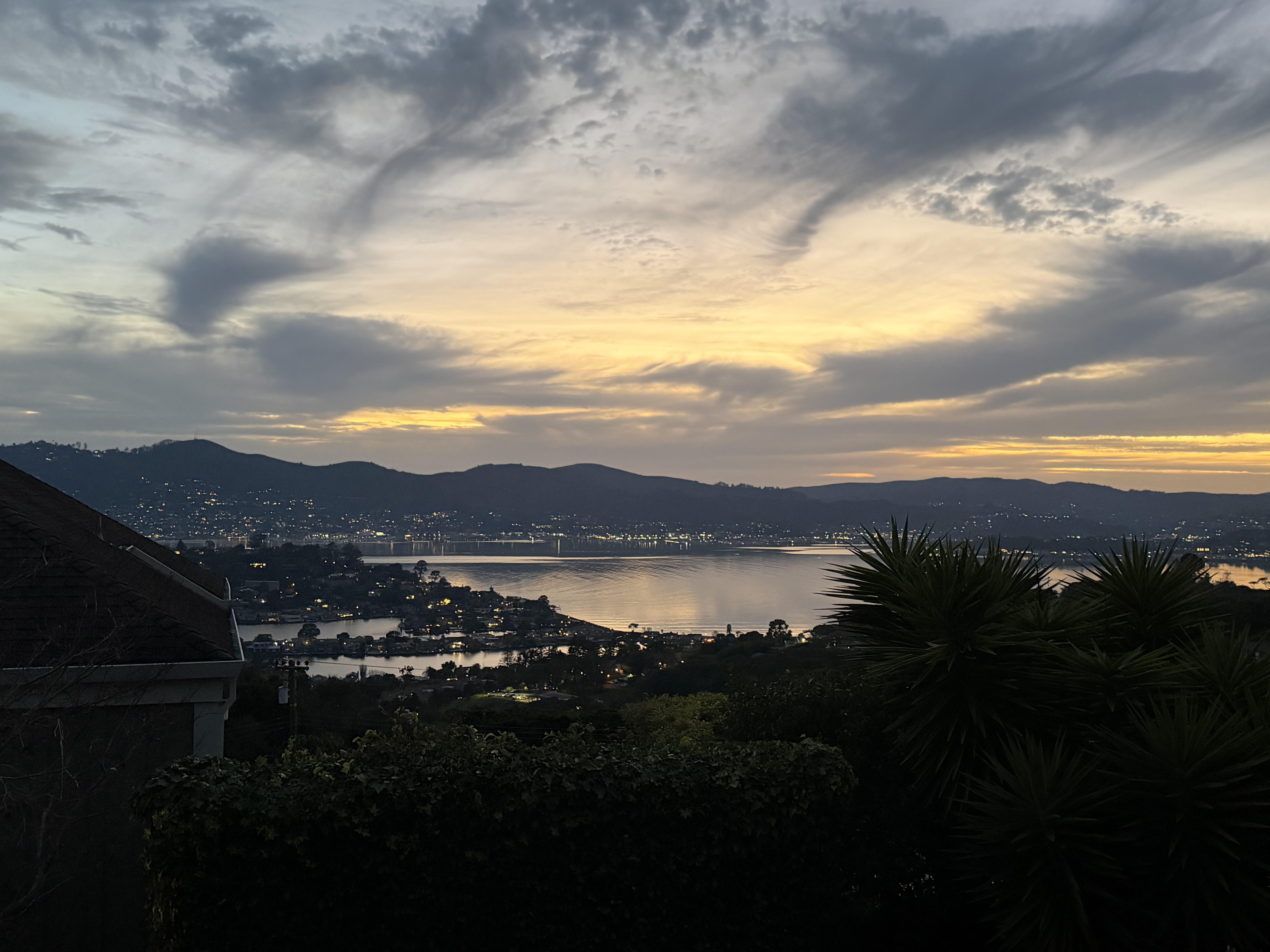
In the early seventies, while we lived in Boston, my husband was offered a job in San Francisco and we decided to move there. Some friends who’d lived in the Bay Area, suggested place to live. They had a map of northern California and explained that Marin County north of the Golden Gate Bridge was lovely.
On the map, I tapped on a peninsular. “What about this?” I said.
“That’s Tiburon! Nobody lives in Tiburon,” Anne repeated.
“Why not?” I asked.
“There is nothing nice there. It’s a hill with wild grass. You must look in Ross, lovely trees, or Hillsborough, elegant properties,” they nodded in unison.
Weeks later we drove across country with our two children. A local southern Marin real estate agent showed us Ross. The only affordable house had a backyard made of concrete. While my husband looked through the rooms, I walked in circles on the concrete and sobbed.
The real estate agent suggested Belvedere, although it was pricey. We drove there and immediately realized that this beautiful island was unaffordable for a family scraping by on an academic salary.
“What about Tiburon?” I asked. I hadn’t stopped thinking about it. The idea of living on land with water on three sides entranced me.
She looked dubious and shook her head while checking her listing book. “Nothing here. Wait a moment, there is a house for sale. The right size, the right price and it has a view of the bay.”
We bought that house at the end of Acela Drive in Tiburon. On two sides rolling hills of long grass stretched around us, and in front we gazed out at the bay and green hills of Sausalito and Mill Valley. Development had begun north of us. Three years later, we moved higher up the mountain, and we, who are still nobodies, still live here.
9/22/13
I can’t see how I could possibly have enjoyed a trip in the countryside
without my Renault rental, since it gave me the flexibility to explore near and far
and not far off was Avignon. Known as “the city of the Popes,” for its magnificent Palace of the Popes that once housed Catholic popes. Nearby is the Petit Palais Museum of Medieval Painting and Sculpture. The city has gorgeous shady avenues and lively squares with outdoor cafes.
Other nearby sights I explored were Fontaine-de-Vaucluse (where
the Sorgues River rushes from a fountain in the rocks below a cliff) and the village of L’Isle-sur-la-Sorgue surrounded by river water that reflects an
astonishing bright green from underwater plants.
Gordes is an extremely popular medieval hilltown that really is worth
visiting but on the day I drove there the town was so crowded that I couldn’t find parking. With so much else to see in Provence, I reluctantly departed. (I’ve recently had a chance to revisit it and it deserves its fame.)
Nearby, I briefly visited Borie Village, actually a village of beehive shaped huts built of stacked stones. Despite its primitive dwellings, it was inhabited up until the 19th century and now it’s a museum.
I spent a few days further north in Marsanne near Montelimar (famous for nougat candy). The wheat fields glowed a brilliant honey gold. By mistake I drove too close to the side of the road and my Renault slid into an irrigation ditch—these ditches line the roads in agricultural areas. Luckily a farmer pulled the auto out with his tractor and my car was without a scratch. This was very important to me since cars rented from Renault Eurodrive are always brand new.
Endless discoveries awaited me off the beaten track in hidden Provence—a region of variety and beauty.
Getting There: Air France flies from several US cities to Paris, call toll free
1 (800) 237-2747.
Renault Eurodrive offers an economical tax-free lease (rental) plan
that includes unlimited mileage, insurance and the use of a brand new auto. They offer a vacation plan for people planning a vacation of
several weeks. 1888-532-1221.
For general information about France: http://www.franceguide.com
Copyright 1996/2013, Patricia Woeber. All Rights Reserved. This file may be
downloaded for personal use. Other copying or reproduction is prohibited
without authorization from Patricia.
9/5/13
In those days Le Barroux, a village in the Vaucluse
Countryside, had Les Geraniums Hotel, a charming
Logis de France hotel (Logis de France are an association
of hotels that are rated zero to four stars).
In those days, the hotel offered home style cooking.
I never thought that eating leek pie in the Vaucluse
would be one of the highlights of my stay in Provence, but
it was. But of course there many more highlights to come.
Each morning, Monsieur the owner went to his
garden to pick basil, mint, thyme and rosemary—with
garlic—the essence of Provencal cooking.
Each evening he concocted another specialty. I remember baked
chicken in a basil sauce, with a glass of Cotes-du-Ventouse, a local
red wine, and I recall other delicious saucy chicken and lamb dishes.
These five course meals were a bargain and included in the price of
the room with half-board. Meals were served in the dining room or on
a quiet terraces—a perfect spot for relaxing.
At twilight, swallows dipped and swooped over the hotel eaves
adding to the magical atmosphere.
Le Barroux is a tiny old village, with a church and a castle,
and it lies in a land of gardens with pale purple lavender, and vineyards
curving over hillsides. Here, and throughout this region,
the indescribable quality of Provence’s famous light is sheer glory.
 France with Patricia Woeber